

How big is a 3m x 4m rug?
A 3m × 4m rug has the following dimensions:
- Length: 400 cm
- Width: 300 cm
- Total area: 12 m²
You may see the same size described as 300 × 400 cm, 400 × 300 cm or 3 × 4 metres. These refer to the same dimensions, although the orientation changes depending on how you position the rug.
The difference between a 3m × 4m rug and a smaller living-room rug is substantial.
| Rug dimensions | Floor area | Difference from 3m × 4m |
| 290 × 200 cm | 5.8 m² | Approximately 52% smaller |
| 340 × 240 cm | 8.16 m² | 32% smaller |
| 400 × 300 cm | 12 m² | — |
| 500 × 300 cm | 15 m² | 25% larger |
| 500 × 400 cm | 20 m² | Approximately 67% larger |
A 400 × 300 cm rug provides almost 47% more floor coverage than a 340 × 240 cm rug. That extra area can make a significant difference when you’re trying to accommodate both a sofa and armchairs.
Important: Not every rug advertised as oversized measures exactly 400 × 300 cm. Some designs are manufactured in nearby sizes, such as 400 × 280 cm. Always confirm the dimensions of the specific product variant before ordering.
What room size works best for a 3m x 4m rug?
A 3m × 4m rug generally suits larger rooms, but there’s no universal minimum room size. The right fit depends on how much exposed floor you want, the position of the furniture, door clearance and walking routes.
Large living rooms
For a separate living room, many homeowners prefer a visible border of flooring around the rug. The table below shows how a centred 400 × 300 cm rug would fit into several rectangular rooms.
| Room dimensions | Exposed floor on each side* | General impression |
| 4.6 × 3.6m | 30 cm | Close fit |
| 5 × 4m | 50 cm | Generous, balanced border |
| 5.5 × 4.5m | 75 cm | More exposed floor around the rug |
| 6 × 5m | 100 cm | Rug defines a central zone |
*Assumes the rug’s 4m side runs along the room’s longer dimension and is centred, with no fixed obstructions.
These are examples rather than strict design rules. Furniture placement may make an off-centre arrangement more appropriate.
Open-plan lounges
In an open-plan living area, measure the lounge zone rather than the entire open-plan floor. A rug should help distinguish the seating area from the kitchen, dining space or main walkway.
A 3m × 4m rug can work particularly well beneath a large sofa arrangement, provided its edges don’t interrupt important walking routes. On tiled floors, it can also make the seating area feel more visually connected.
Dining rooms
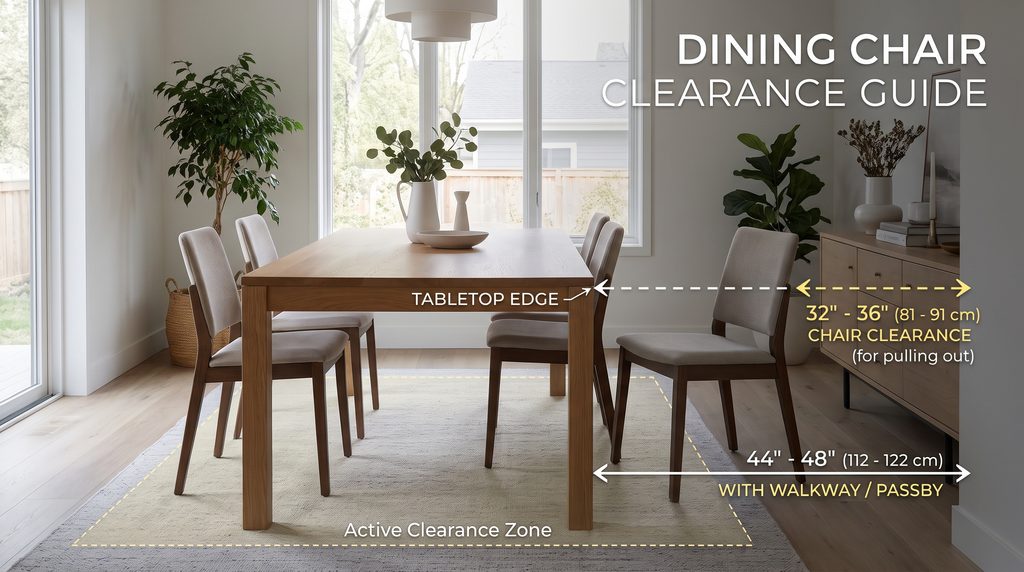
A large rug can help define a dining area, but dining chairs create an additional sizing requirement.
Prime Rugs’ rug size guide recommends allowing at least 60 cm of rug beyond each side of the dining table so chairs remain on the rug when pulled out.
For a 400 × 300 cm rug, that gives a table-size starting point of:
- Maximum table length: approximately 280 cm
- Maximum table width: approximately 180 cm
These dimensions assume a 60 cm extension on every side. If your dining chairs are particularly deep or are pulled back further, you may need more clearance. Measure the chairs in their normal pulled-out position before deciding.
How to position a 3m x 4m rug beneath a sofa
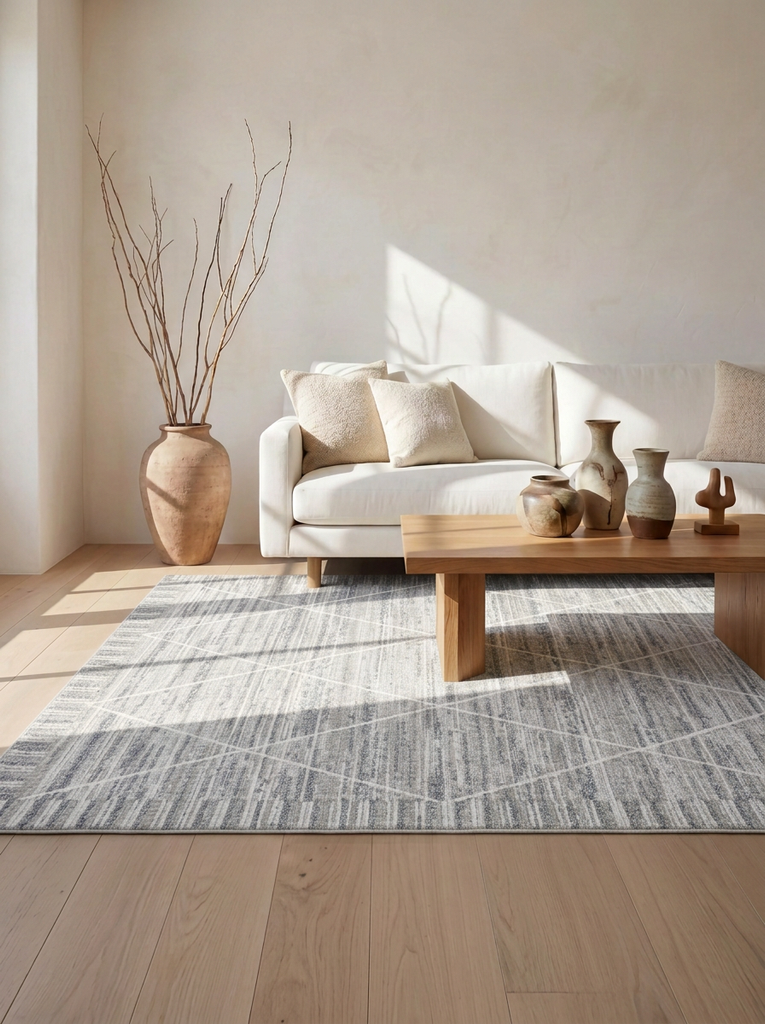
The ideal arrangement depends on whether you want only the front furniture legs on the rug or the entire seating group on it. There are three common approaches.
Layout 1: Front legs on the rug
Best for many standard lounges.
Place the 4m side parallel to the main sofa, with the sofa’s front legs resting on the rug. This connects the sofa to the coffee table and any accompanying armchairs.
For example, a sofa measuring 220 cm wide would have 90 cm of rug extending beyond each end if centred along the 400 cm side. That doesn’t automatically mean armchairs will fit comfortably: their placement and depth still matter.
This arrangement can work well when the sofa is against a wall and you don’t need every furniture leg on the rug.
Layout 2: All furniture legs on the rug
Best for a self-contained seating group.
For a fully furnished arrangement, the entire sofa and chairs sit inside the rug’s edges. A 3m × 4m rug can accommodate this in some configurations, but the available space must also allow comfortable distances between seats and the coffee table.
Turning the rug so the 4m dimension runs away from the sofa may help in a narrower seating arrangement.
For example, a 220 cm sofa centred across the rug’s 300 cm width leaves approximately 40 cm on either side. That is enough to frame the sofa visually, but may not accommodate additional chairs alongside it.
Before choosing this layout, tape out the rug and the actual furniture footprints. Don’t assume an all-legs-on arrangement will work merely because the sofa itself fits.
Layout 3: L-shaped sectional sofa
Best for corner couches and open-plan lounges.
An L-shaped sofa requires a different approach because the rug needs to connect both sections of the couch. A practical starting point is to position the rug’s longer side along the longer section of the sofa.
Aim for the front legs of both sections to rest on the rug. If the longer section of your sofa measures approximately 3m, a 4m rug length may provide enough room for a balanced front-legs-on arrangement.
For a larger sectional, or if you want the entire sofa to sit on the rug, compare the available oversized rugs
How to measure your room before buying
A few minutes of measuring can prevent a rug that looks too small, blocks a doorway or doesn’t reach the furniture.
- Measure the usable floor area. Record the room’s length and width, then account for built-in cupboards, hearths and other fixed features.
- Measure your sofa and chairs. Include their depth and the distance between their legs.
- Choose a furniture arrangement. Decide whether the front legs or all legs will sit on the rug.
- Mark out 400 × 300 cm. Use masking tape to create the outline on the floor.
- Check walking routes. Walk around the taped area as you normally would.
- Check door clearance. Include inward-opening doors and any tracks or thresholds.
- Confirm the actual product size. A 400 × 280 cm rug is not the same as a 400 × 300 cm rug.
If possible, leave the masking-tape outline in place for a day. It helps you judge whether the dimensions feel right during normal use.
3m x 4m rugs versus other large rug sizes
A 3m × 4m rug isn’t always the best option. A slightly smaller rug may work better in a room with narrow walkways, while a larger rug may be necessary for an oversized sectional.
Prime Rugs identifies 290 × 200 cm, 340 × 240 cm and 400 × 300 cm as common large-rug sizes.
| Rug size | Typical application | Main consideration |
| 290 × 200 cm | Standard sofa or smaller lounge | Armchairs may sit partly or entirely outside the rug |
| 340 × 240 cm | Medium-to-large lounge | Often accommodates a sofa and chairs with front legs on |
| 400 × 300 cm | Large lounge, sectional or dining area | Can anchor a wider furniture arrangement |
| 500 × 300 cm | Long seating arrangement | Useful when extra length is needed |
| 500 × 400 cm | Very large lounge or open-plan zone | Requires substantial floor space |
The most useful question is not simply which rug is bigger. It’s which rug allows the furniture arrangement you want without compromising circulation.
If you’re still deciding, browse Prime Rugs’ large rug selection and compare the dimensions available for each design.
Choosing colour and pattern for a large rug
A 3m × 4m rug covers enough floor to have a strong effect on the appearance of a room. That makes colour and pattern worth considering carefully.
Neutral and tonal rugs
Cream, stone, grey and beige rugs can create a quieter foundation for colourful furniture or artwork. In a room with light tiles, a slightly darker or warmer rug can help define the lounge area.
Abstract and geometric rugs
Large-scale abstracts work well when you want the rug to be a visual feature. Smaller repeating geometric patterns can be useful when much of the rug will be covered by furniture. Think about how the design will look with the coffee table in place, not only in a product photograph.
Traditional and bordered rugs
A traditional rug with a decorative border can frame a seating arrangement. However, check whether the furniture will hide the border or central medallion. For dining areas, an all-over pattern may be easier to position beneath a table than a design that relies on a visible centre.
Practical colour choices
Mixed-tone designs may disguise minor everyday dust and marks better than very pale or dark solid colours. For busy family rooms, also consider the rug’s material, pile and care requirements rather than choosing solely by colour.
When is a 3m x 4m rug too big?
A 3m × 4m rug may be too large if:
- It leaves almost no visible flooring in a room where you want a framed-rug look.
- It interferes with doors, walkways or fixed furniture.
- It extends awkwardly into another living zone.
- It places an exposed rug edge directly across a heavily used walking route.
- It overwhelms a small seating arrangement rather than connecting the furniture.
However, a large rug isn’t automatically wrong in a smaller room. Some interiors deliberately use rugs that cover most of the visible floor. The important distinction is whether the result is intentional and practical.
If a 400 × 300 cm outline feels too large, try marking out 340 × 240 cm before making a final decision.
Choosing a 3m x 4m rug from Prime Rugs
Once you’ve measured the room, you can narrow your search by size, style and colour. Prime Rugs offers a range of large-rug designs, including abstract, geometric and traditional styles.
Start with the large rugs collection and use the size options on individual product pages to confirm the dimensions.
Check the selected variant carefully. A design appearing in a large-rug collection does not necessarily mean that it is available in an exact 400 × 300 cm size.
For example, some Prime Rugs designs are offered in 400 × 280 cm, which is 20 cm narrower than a 400 × 300 cm rug. That difference may matter if you’re relying on the rug to reach specific furniture legs.
If your priority is a contemporary design, you can also explore the modern rugs collection
Your 3m x 4m rug buying checklist
- ☐ The selected product variant has the dimensions you need.
- ☐ The rug fits the usable floor area.
- ☐ Sofa and chair legs sit where you intended.
- ☐ Doors open freely and walking routes remain clear.
- ☐ The pattern still works beneath the furniture.
- ☐ The material and care instructions suit your household.
- ☐ The delivery route into the room can accommodate the packaged rug.
Find the right large rug for your home
A 3m × 4m rug can make a large lounge feel connected and give an open-plan seating area a clear boundary. The key is to measure the furniture, not just the room, and decide how you want the rug to sit beneath it.
Once you’ve checked the dimensions with masking tape, explore large rugs at Prime Rugs and compare the available sizes and designs.
For guidance on other rooms and furniture arrangements, consult the Prime Rugs rug size guide